
As an Amazon Associate I earn from qualifying purchases.
There is a point in long-term caregiving that nobody really warns you about.
You look at your life and realize almost everything revolves around someone else.
Their medications.
Their meals.
Their appointments.
Their sleep.
Their symptoms.
Their needs.
Their bad days.
Their emergencies.
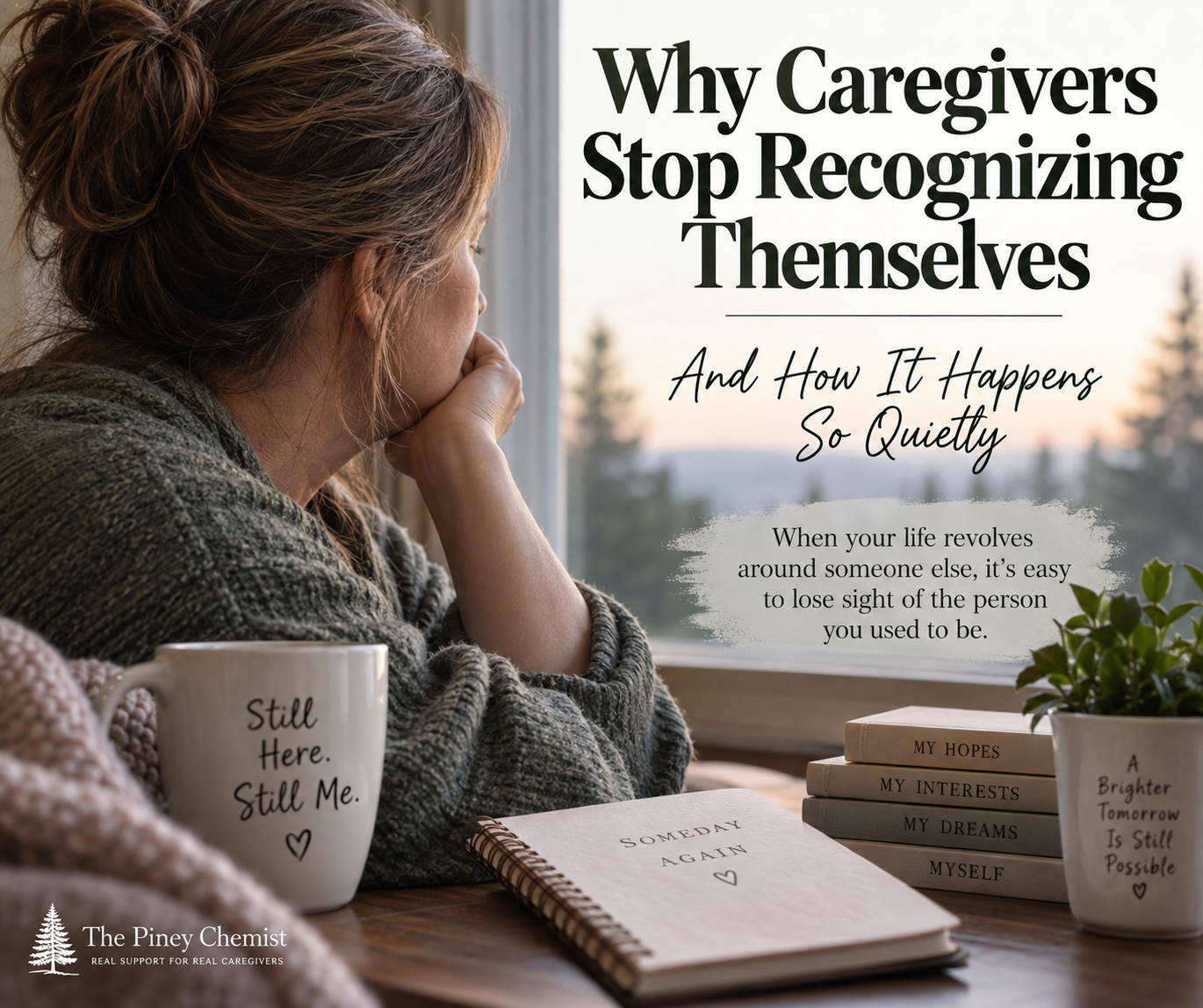
And somewhere along the way, without making a conscious decision to do it, you stopped being part of your own life.
I don’t mean that you stopped caring about yourself.
I mean caregiving slowly took up so much space that there wasn’t much room left for the person you were before it.
That happened to me.
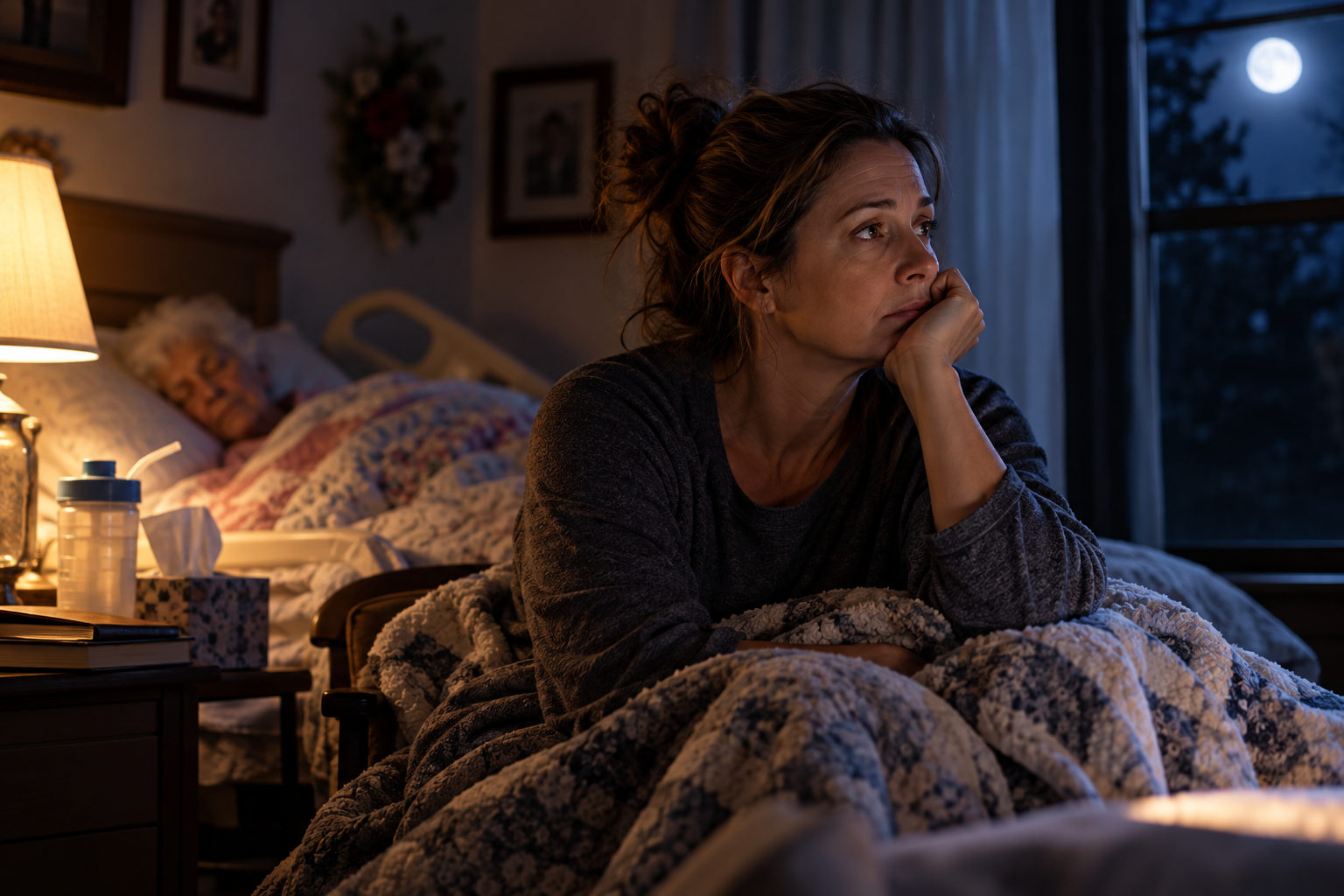
I spent 11 years caring for my grandmother, and as her needs increased, my world became smaller and smaller.
Eventually, I wasn’t thinking about what I wanted to do that weekend.
I was thinking about medications, supplies, transfers, tube feedings, appointments, nighttime care, and whether something I noticed that day was something I needed to worry about.
You get so used to functioning this way that you don’t necessarily notice what is happening.
Until one day you do.
And you realize:
I don’t really recognize myself anymore.
It Doesn’t Happen All at Once
That’s what makes this part of caregiving so difficult to see.
There usually isn’t one dramatic moment when you decide to give up your old life.
It happens through hundreds of tiny decisions that make perfect sense at the time.
You skip something because your loved one isn’t having a good day.
You cancel plans because you don’t have anyone who can stay with them.
You stop making plans because canceling them has become embarrassing.
You don’t bother getting dressed because you’re not going anywhere anyway.
You stop doing something you enjoy because you’re too tired by the time you have a free minute.
You stop calling people because you don’t have the energy to explain everything.
You tell yourself:
Maybe next week.
Then next week becomes next month.
And eventually you can’t remember the last time you did something simply because you wanted to do it.
That’s part of what makes the feeling of slowly becoming invisible as a caregiver so difficult to recognize. It usually doesn’t happen because of one enormous sacrifice. It happens through thousands of small ones.
Your Entire Identity Can Become “The Caregiver”
At first, caregiving is something you’re doing.
Then it can slowly become who you are.
People ask about your loved one before they ask about you.
“How is she doing?”
“How was the appointment?”
“Did the doctor figure anything out?”
“Is she sleeping any better?”
Those aren’t bad questions.
But after years of answering them, you can start realizing that almost every conversation about your life is actually a conversation about the person you’re caring for.
And when someone finally asks:
“How are YOU doing?”
You may not even know how to answer.
Because what are you supposed to say?
You’re tired.
You’re worried.
You’re managing.
You’re getting through the day.
So you say:
“I’m okay.”
And keep moving.
You Stop Asking Yourself What You Want
Caregiving trains you to think ahead constantly.
What medication is next?
Do we have enough supplies?
When was the last bowel movement?
Did I call the doctor’s office?
Is that swelling new?
What time is the appointment?
Do I need to reorder something?
What needs to be done before bedtime?
When your brain spends years running through questions like these, another type of question can quietly disappear:
What do I want?
Not what needs to happen.
Not what would make caregiving easier.
Not what your loved one needs.
What do you want?
That can become surprisingly difficult to answer.
And this is one reason generic advice about taking care of yourself can feel so frustrating. When you’re responsible for another person’s daily needs, traditional “self-care” advice doesn’t always fit the reality of caregiving.
Sometimes you don’t need someone telling you to take a bubble bath.
You need someone to understand why you haven’t had an uninterrupted hour to yourself in weeks.
Even Your Free Time Doesn’t Feel Free
One of the strangest things about caregiving is that you can technically have a break without actually feeling like you’re on one.
Someone else may be sitting with your loved one.
You might finally leave the house.
But part of your brain stays home.
Did I explain everything?
Did I leave the medication instructions?
Will they know what to do if something happens?
Should I check my phone?
Maybe I should text.
Maybe I shouldn’t have left.
Sometimes the work of caregiving follows you even when you’re physically away from it.
That’s why simply telling caregivers to “take more time for yourself” can feel so disconnected from reality.
Taking the time isn’t always the hardest part.
Sometimes the hardest part is convincing your brain that you’re allowed to stop being on duty.
You May Stop Recognizing Your Personality Too
This part can be especially uncomfortable.
You may become more impatient.
More irritable.
Quieter.
More anxious about leaving the house.
Less spontaneous.
Less social.
Things that used to feel small can suddenly feel overwhelming.
That doesn’t necessarily mean you’ve become a completely different person.
Sometimes it means you’ve been operating under relentless responsibility for too long.
When you’re exhausted, interrupted all night, constantly needed, and always watching for the next problem, there isn’t much energy left for the lighter parts of yourself.
The funny part.
The curious part.
The spontaneous part.
The part that used to have hobbies, plans, ideas, and things to look forward to.
Those pieces can get buried underneath responsibility.
And sometimes this happens long before a caregiver realizes how depleted they’ve become. That’s why I think it’s important to recognize the silent burnout that can happen before the breakdown.
Burnout doesn’t always arrive dramatically.
Sometimes it looks like slowly becoming someone you don’t recognize.
There Is Grief in This Too
Caregiver grief isn’t always about losing the person you’re caring for.
Sometimes you’re grieving pieces of your own life while caregiving is still happening.
The freedom you used to have.
Relationships that changed.
Opportunities you couldn’t take.
Trips you couldn’t go on.
Career decisions you had to make.
The person you thought you would be at this age.
And admitting that can bring enormous guilt.
Because you love the person you’re caring for.
You wouldn’t abandon them.
You know they didn’t choose their illness or disability.
So you tell yourself you shouldn’t feel sad about what caregiving has cost you.
But two things can exist at the same time.
You can deeply love someone and still miss your old life.
That kind of grief can be particularly lonely when you don’t have much support. I’ve written before about the hidden grief of being an unsupported caregiver because sometimes caregivers need permission to admit that there are losses happening long before caregiving ends.
The Goal Isn’t to “Get Your Old Self Back”
I don’t think that’s realistic.
Long-term caregiving changes you.
It changed me.
Some of those changes aren’t things I would want to erase.
Caregiving taught me how much I could handle.
It taught me to pay attention.
It taught me patience in ways I never expected.
It taught me how important preparation can be when you’re responsible for another human being.
But it also showed me how easy it is to disappear into responsibility.
So maybe the goal isn’t becoming exactly who you were before caregiving.
Maybe it’s making sure you still exist inside the life you’re living now.
Start With Something Smaller Than “Self-Care”
You don’t necessarily need a weekend away.
You don’t need a spa day.
You don’t need another person telling you to make more time for yourself when you barely have enough time to shower.
Start much smaller.
Ask yourself:
What is one thing that still feels like me?
Maybe it’s music you used to listen to.
Maybe it’s sitting outside for ten minutes.
Maybe it’s putting on clothes you actually like even though you’re staying home.
Maybe it’s reading something that has absolutely nothing to do with caregiving.
Maybe it’s talking to someone about something other than illness.
Maybe it’s working on a hobby for fifteen minutes after your loved one falls asleep.
Maybe it’s simply noticing:
I haven’t done anything I enjoy in a very long time.
That realization matters.
Because you can’t protect something you’ve stopped noticing.
Pay Attention to What Caregiving Is Doing to You
Caregivers become incredibly good at monitoring other people.
We notice changes in appetite.
Sleep.
Mood.
Skin.
Pain.
Mobility.
Medications.
Bathroom habits.
Breathing.
But we often don’t monitor ourselves with the same attention.
When did I last sleep well?
Am I angry all the time lately?
Have I stopped talking to everyone?
Am I constantly overwhelmed?
Am I functioning entirely on autopilot?
Have I started thinking that feeling terrible is simply part of being a caregiver?
Those questions matter.
I learned some of that much later than I wish I had. Looking back, there were caregiving mistakes that drained my energy simply because I thought I had to keep pushing through everything.
Sometimes you need to check on the caregiver too.
Not because caregiving should suddenly become about you.
But because you are one of the people in this situation who matters.
You Are More Than What You Get Done Today
Caregiving can turn life into one enormous checklist.
Medication given.
Laundry washed.
Supplies ordered.
Appointment scheduled.
Bed changed.
Meals prepared.
Night routine finished.
Everyone else taken care of.
And when that’s your life for long enough, it’s easy to measure a “good day” entirely by how much you managed to accomplish.
But there is still a person underneath all of those responsibilities.
A person with opinions.
Interests.
Plans.
Preferences.
Humor.
Dreams.
Limits.
And needs.
You may not have the freedom you had before caregiving.
You may not even be able to make major changes right now.
But you can start noticing yourself again.
You can start protecting tiny pieces of your identity.
And you can stop treating every need of your own as something that automatically belongs at the bottom of the list.
Because one of the hardest parts of caregiving isn’t only how much you have to do.
It’s how quietly you can disappear while doing it.
And sometimes finding yourself again begins with something incredibly small:
Remembering that you’re still there.
If you’re caring for someone and feel like nobody around you understands what this life actually looks like, you’re in the right place.
I write about the parts of caregiving people don’t always say out loud—the exhaustion, resentment, guilt, night caregiving, burnout, isolation, and the practical things that can make the day a little easier.
Follow The Piney Chemist for honest caregiver support and real-life solutions from someone who has lived it.
Amazon and the Amazon logo are trademarks of Amazon.com, Inc, or its affiliates.


Leave a Reply