
As an Amazon Associate I earn from qualifying purchases.
There is a feeling caregivers don’t talk about very often.
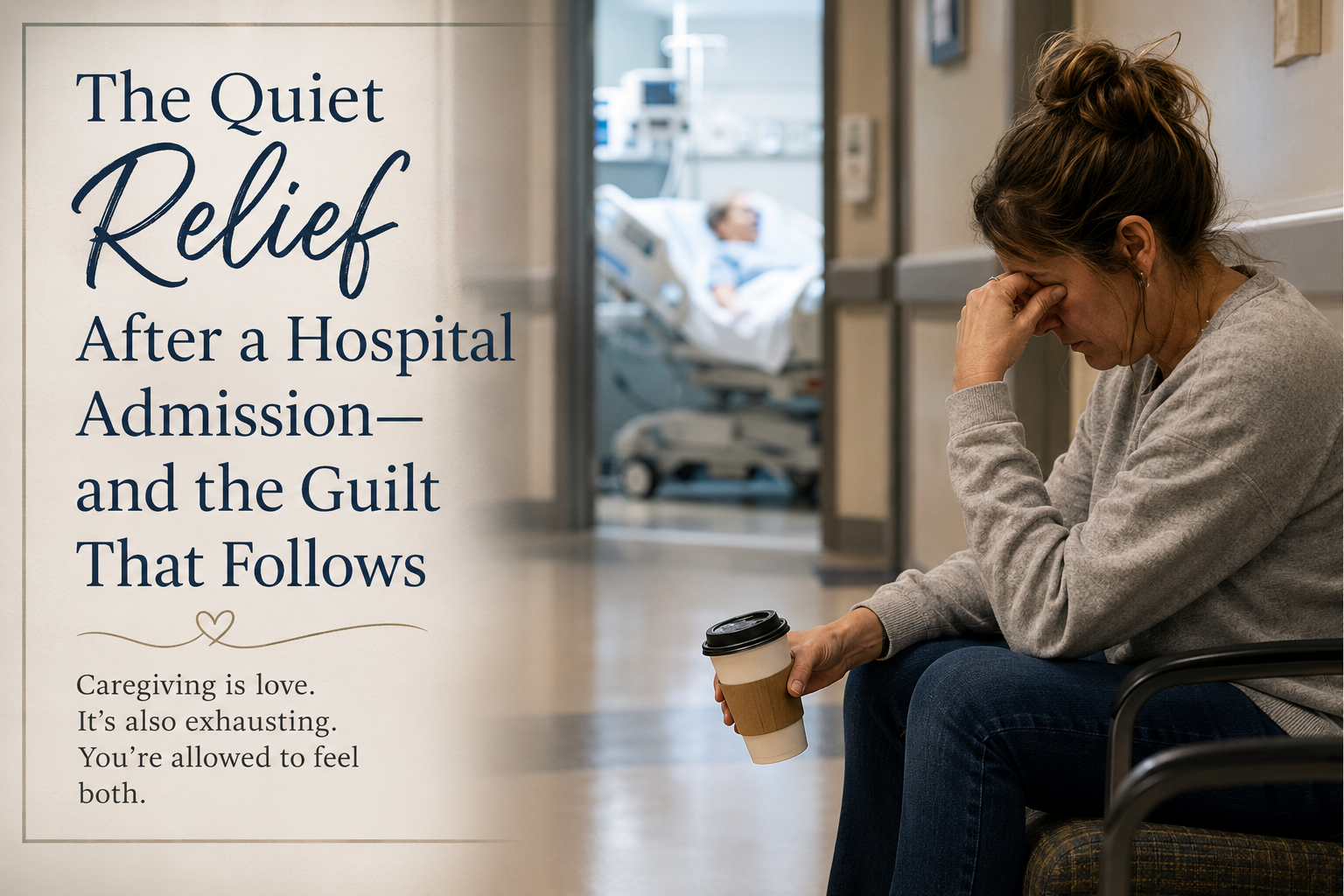
Your loved one gets admitted to the hospital.
You’re worried. You’re answering questions. You’re trying to remember medications, symptoms, dates, doctors, and everything that happened leading up to this moment.
And underneath all of that worry, there may be another feeling you don’t want to admit.
Relief.
For the first time in what feels like forever, someone else is watching them.
Someone else is checking the medications.
Someone else is listening for the call bell.
Someone else is responsible for what happens in the middle of the night.
And for just a moment, the weight you’ve been carrying every hour of every day isn’t entirely yours.
Then comes the guilt.
The Thought You Don’t Want to Say Out Loud
I remember what it was like when caregiving became constant.
When someone depends on you for almost everything, there really isn’t an “off” switch.
Even when you’re sitting down, you’re listening.
Even when you’re sleeping, part of you is waiting.
Even when nothing is happening, you’re thinking about what needs to happen next.
Did I give the medication?
Do I have enough supplies?
Is that breathing normal?
When was the last feeding?
Do I need to reposition her?
What appointment is coming up?
What am I forgetting?
That constant responsibility becomes so normal that sometimes you don’t realize how heavy it is until somebody else takes part of it from you.
A hospital admission can do that.
Suddenly there are nurses coming in.
There are monitors.
There are doctors.
There are people whose entire job, during that shift, is to watch the person you’ve been watching around the clock.
And somewhere inside you, there may be this tiny thought:
Maybe I can finally sleep tonight.
That’s usually when the guilt hits.
“What Kind of Caregiver Feels Relieved?”
That’s the question we can ask ourselves.
They’re sick enough to be in the hospital, and you’re thinking about sleep?
They’re lying in a hospital bed, and part of you is relieved you don’t have to handle everything tonight?
It can feel terrible.
But relief doesn’t mean you’re relieved that your loved one is sick.
You’re relieved that you are not the only person responsible for keeping everything going for a few hours.
Those are two completely different things.
You can be scared about what is happening to someone you love and still feel your shoulders drop when a nurse tells you it’s okay to go home and get some rest.
Both feelings can exist at the same time.
Sometimes You Don’t Even Go Home
The strange part is that many caregivers don’t actually take the break.
We stay.
We sit in the uncomfortable hospital chair.
We straighten blankets.
We watch the monitors even though we don’t know what half the numbers mean.
We answer the same medical-history questions again.
We make sure the staff knows the little things that aren’t written in the chart.
And sometimes we’re afraid to leave because we’ve spent so long being the person who knows everything.
But even sitting in that chair can feel different from being home.
Because if something happens, there is a button you can push.
Someone comes.
That sounds like such a small thing until you’ve spent years being the person everyone turns to when something goes wrong.
At home, you are the button.
Hospital Admissions Can Reveal How Exhausted You Really Are
Sometimes the exhaustion doesn’t hit until the crisis settles down.
You get your loved one admitted.
The questions slow down.
The room gets quiet.
And suddenly you feel like you could sleep for three days.
That exhaustion didn’t appear in the hospital.
It was already there.
You’ve just been functioning through it.
Caregivers can become incredibly good at operating while exhausted because there isn’t always another option.
Meals still need to happen.
Medications still need to be given.
Bodies still need to be repositioned.
Appointments still need to be made.
Supplies still need to be ordered.
Laundry doesn’t care that you barely slept.
You keep going because someone needs you.
Then somebody else takes over for a few hours and your body seems to say:
Finally.
That isn’t selfishness.
That’s exhaustion showing itself.
Then You Start Thinking About Going Home
Home is supposed to be the place you want to be.
But when you’re a caregiver, home can also represent responsibility.
The hospital admission might mean you walk into your house and, for once, nobody needs anything immediately.
You don’t have to listen for movement from the other room.
You don’t have to wonder whether you’ll be awakened twenty minutes after falling asleep.
You don’t have to keep one ear open while you shower.
And that silence can feel wonderful.
Then heartbreaking.
Then wonderful again.
That’s the part people don’t explain about caregiving.
Your emotions don’t always arrive neatly one at a time.
You can miss someone who is only a few miles away.
You can worry about them constantly.
You can call the hospital to check on them.
And you can still crawl into your own bed and feel relieved that someone else is handling the night.
Love and relief are not opposites.
You May Even Dread Discharge
Here’s another feeling caregivers rarely admit.
Sometimes when the doctor starts talking about discharge, your stomach drops.
Of course you want your loved one well enough to come home.
But you also know what “going home” means.
The medications come home.
The new instructions come home.
The follow-up appointments come home.
The mobility problems come home.
The nighttime care comes home.
The worry comes home.
And often, the responsibility comes right back to you.
Sometimes there are even more responsibilities than there were before the hospital stay.
New medications.
New equipment.
New symptoms to watch.
New restrictions.
New instructions you’re afraid you’ll mess up.
So while everyone else is celebrating discharge, the caregiver may already be mentally making a list.
How am I going to manage all of this?
That doesn’t mean you don’t want your loved one home.
It means you understand exactly what bringing them home requires.
Use the Hospital Stay for More Than Catching Your Breath
If your loved one is safely being cared for, this can also be an opportunity to prepare for what happens next.
Write down questions for the medical team.
Make sure you understand medication changes.
Ask what symptoms should trigger a call to the doctor or a return to the hospital.
Find out exactly what your loved one will need once they’re home.
Ask about equipment, home health, therapy, supplies, wound care, feeding instructions, mobility restrictions, or anything else that applies.
And don’t wait until someone is standing at the door with discharge paperwork to ask the questions that have been keeping you awake.
One of the hardest parts of caregiving is trying to hold everything in your head.
Don’t.
Write it down.
Take notes.
Ask again if something doesn’t make sense.
Prepare the house before discharge if you can.
Refill supplies.
Wash what needs washing.
Set up the bedside area.
And if you have an opportunity to sleep, sleep.
You do not earn extra caregiving points for arriving at discharge completely exhausted.
When Your Loved One Comes Home, Don’t Try to Remember Everything
This is where hospital discharge can become overwhelming very quickly.
You may leave with paperwork in your hand, medication changes, follow-up appointments to schedule, symptoms to watch for, new instructions, and a loved one who still needs care.
And somehow you’re supposed to remember all of it.
I learned during my own years of caregiving that keeping everything in my head wasn’t a system. It was exhausting.
That’s one of the reasons I created my Caregiver Printable Bundle.
It’s designed to give caregivers one place to organize the things that are so easy to lose track of when you’re tired and overwhelmed.
The bundle can help you:
- Keep medications and dosages organized with the Medication Master List
- Record symptoms, changes, and observations with the Symptom Tracker & Observation Log
- Keep essential caregiving supplies from running out with the Supply Tracker
- Write down questions and important information for appointments with the Caregiver Appointment Companion
- Keep daily priorities, reminders, and follow-ups together with the Caregiver Command Center
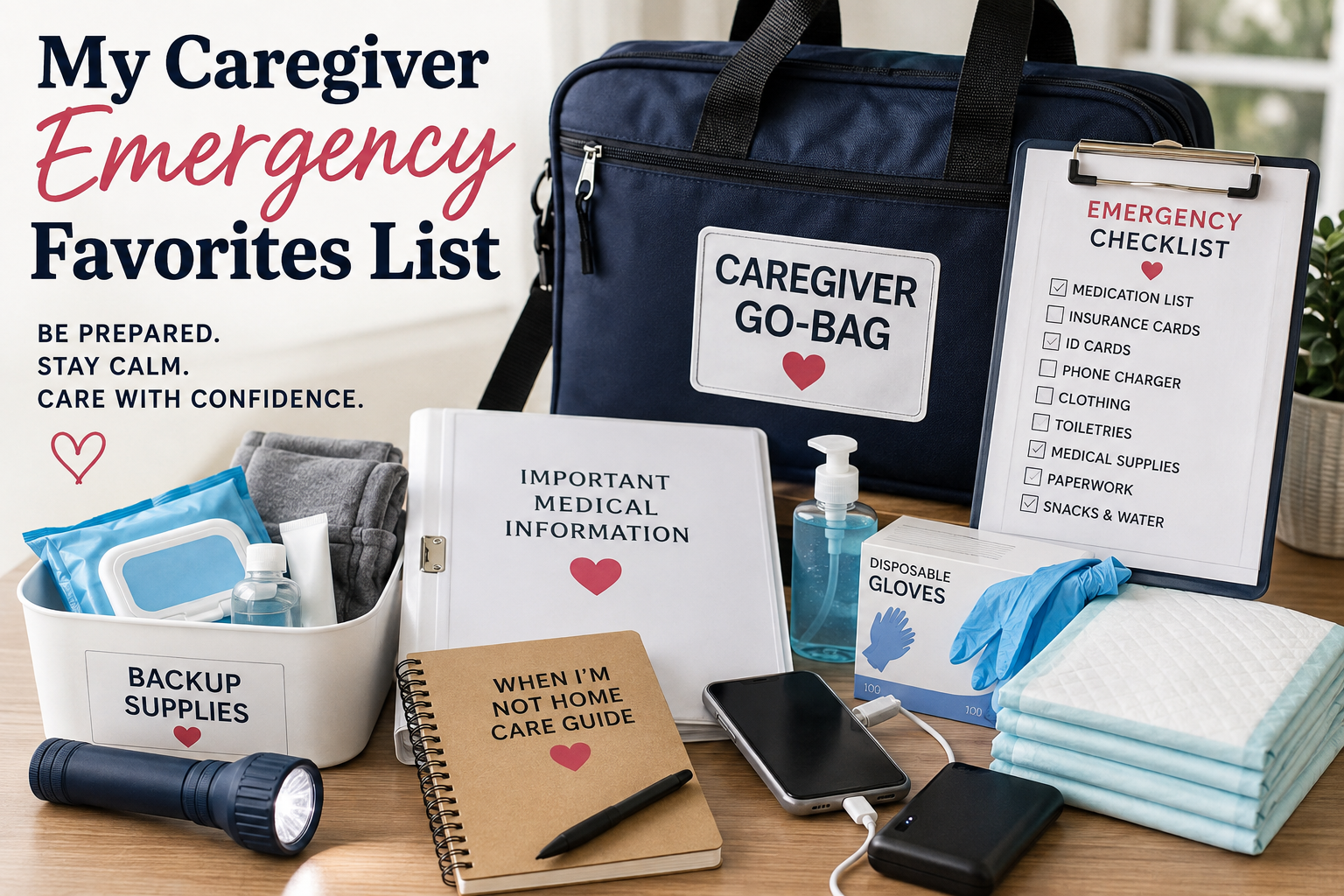
- Keep important medical and emergency information easier to find when you need it
It won’t remove the responsibility of caregiving.
But it can remove some of the pressure of trying to remember every single detail yourself.
If you’re preparing for a hospital discharge—or you’re simply tired of carrying the entire caregiving checklist in your head—you can find my Caregiver Printable Bundle here.
The Relief Is Telling You Something
Instead of immediately judging yourself for feeling relieved, pay attention to what that relief might be saying.
Maybe you haven’t had uninterrupted sleep in months.
Maybe you’ve been scared to leave your loved one alone long enough to run an errand.
Maybe you’re carrying medical responsibilities that once would have been handled almost entirely by professionals.
Maybe you haven’t had a day when somebody else was responsible.
Maybe you’re simply tired.
Really tired.
The kind of tired that a shower, a cup of tea, or an hour to yourself isn’t going to fix.
Sometimes that moment of relief in the hospital is the first time a caregiver realizes:
I have been carrying too much for too long.
That realization matters.
I Wish Caregivers Talked About This More
Caregiving comes with emotions that don’t always sound pretty when we say them out loud.
Relief.
Resentment.
Anger.
Frustration.
Loneliness.
Fear.
Even wishing, just for one night, that somebody else would take over.
We hide those feelings because we think they say something about how much we love the person we’re caring for.
I don’t think they do.
I think they say something about what happens when one human being is expected to carry an enormous amount of responsibility for another human being, sometimes for years.
I loved my grandmother.
And caregiving was still exhausting.
Those two truths never canceled each other out.
That’s something I wish more caregivers were allowed to say.
If You’re Sitting in That Hospital Chair Right Now
If part of you feels relieved that someone else is handling the medications tonight, you’re allowed to acknowledge that feeling.
If you’re thinking about going home and sleeping, go sleep if you safely can.
If you’re eating an actual meal because someone else is watching your loved one, eat it.
If you’re sitting in your car for ten quiet minutes before driving home, sit there.
You don’t have to turn every moment away from caregiving into another caregiving task.
The hospital admission may not be a break you wanted.
It certainly isn’t a vacation.
But if it gives your exhausted body and mind a few hours when you aren’t carrying everything alone, you don’t have to punish yourself for needing those hours.
You can love someone deeply and still need relief from the responsibility of caring for them.
That doesn’t make the love smaller.
It shows just how heavy the caregiving has become.
You Don’t Have to Pretend Caregiving Is Easy
I write about the parts of caregiving that often stay behind closed doors—the exhaustion, guilt, resentment, nighttime struggles, practical problems, and the things I learned from living it myself.
If that sounds like the kind of caregiving conversation you’ve been looking for, follow The Piney Chemist.
No pretending caregiving is beautiful every minute.
No pretending a bubble bath fixes burnout.
Just honest caregiving, practical solutions, and the things many of us were thinking but were afraid to say out loud.
Follow The Piney Chemist and save this post for the day you need the reminder that you can love someone with everything you have—and still be tired of carrying everything.
Keep Reading: More Caregiver Support
If this article felt familiar, these may help with what comes next:
[Emergency Planning for Solo Caregivers (When There Is No Backup Help)]
Because hospital stays and emergencies have a way of exposing just how vulnerable caregiving can feel when you’re the only one managing everything.
[Why Solo Caregivers Burn Out Faster Than Anyone Else]
If the relief you felt when someone else took over surprised you, this explains why carrying caregiving alone becomes so physically and mentally exhausting.
[The Silent Burnout Before the Breakdown]
Burnout doesn’t always look dramatic. Sometimes it looks like functioning, getting everything done, and quietly realizing you have nothing left.
[Night Caregiving Is Breaking Caregivers]
For caregivers who dread going home because nighttime means the responsibility starts all over again, this one goes deeper into why the overnight hours can become so difficult.
Amazon and the Amazon logo are trademarks of Amazon.com, Inc, or its affiliates.


Leave a Reply