
As an Amazon Associate I earn from qualifying purchases.
There is a part of caregiving that doesn’t get talked about nearly enough.
It’s not the bathing.
It’s not the medications.
It’s not the appointments, the paperwork, the interrupted sleep, or even the physical exhaustion.
It’s the decisions.
The decisions you have to make for someone you love when you have absolutely no way of knowing if you’re making the right one.
Do I call the doctor?
Do I wait and see?
Is this serious enough for the emergency room?
Should I agree to this procedure?
Should I push harder when something doesn’t feel right?
Is it still safe for them to be at home?
Do they need more care than I can realistically provide?
And sometimes the hardest question of all:
What if I make the wrong choice?
Nobody Tells You How Heavy That Responsibility Feels
When you become a caregiver, people talk about responsibility.
Make sure medications are given correctly.
Keep appointments.
Watch for changes.
Keep them safe.
Follow the doctor’s instructions.
But there is another kind of responsibility that slowly lands on your shoulders.
You become the person who has to decide what happens next.
Sometimes you have professionals helping you.
Sometimes you have family members offering opinions.
But when you are the person standing there at 2:00 in the morning trying to decide whether something is serious enough to go to the hospital, those opinions aren’t always very useful.
You are the one looking at the person you love.
You are the one who knows what “normal” looks like for them.
And you are the one who knows you may have to live with whatever happens next.
I spent years caring for my grandmother through strokes, paralysis, heart failure, feeding tubes, a tracheostomy, swallowing problems, hospitalizations, and countless changes in her condition.
There were plenty of situations where there wasn’t a flashing sign telling me:
THIS IS THE CORRECT DECISION.
I had to observe.
Think.
Ask questions.
Make calls.
And sometimes simply trust that something didn’t seem right.
That responsibility can be terrifying.
If you’re caring for someone largely on your own, that weight becomes even heavier. I wrote more about preparing for those moments in Emergency Planning for Solo Caregivers (When There Is No Backup Help).
Caregivers Rarely Have All the Information
This is what makes caregiving decisions so difficult.
You are often making them with incomplete information.
A symptom could be something minor.
Or it could be the beginning of something serious.
A treatment could help.
It could also create new problems.
Keeping someone at home may be what they desperately want.
But their needs may eventually become more than one person can safely manage.
There often isn’t a perfect answer sitting in front of you.
There are simply options.
And every option seems to come with consequences.
Yet caregivers can put enormous pressure on themselves to somehow predict the future.
We think:
If I choose this, what happens next?
What if I regret it?
What if they get worse?
What if I should have noticed something sooner?
What if everyone thinks I made the wrong decision?
That last one can be especially painful.
Everyone Has an Opinion When They Aren’t Carrying the Responsibility
One of the hardest parts of caregiving is receiving criticism from people who aren’t actually doing the caregiving.
Someone who visits occasionally can have very strong opinions about what you “should” do.
You should take them to another doctor.
You shouldn’t have taken them to the hospital.
You should keep them home.
You should get more help.
You should do this.
You shouldn’t do that.
But advice feels very different when you aren’t the person who has to carry out the decision afterward.
The caregiver is often the one arranging transportation, managing medications, watching symptoms, staying awake at night, talking with doctors, cleaning up, repositioning, feeding, transferring, and dealing with whatever comes next.
It is easy to have an opinion from the sidelines.
It is much harder to be the person standing in the middle of it.
Sometimes There Isn’t a “Right” Decision
This may be one of the hardest things for caregivers to accept.
Sometimes caregiving isn’t choosing between a right decision and a wrong one.
It’s choosing between two imperfect options and carrying the weight of whichever one you choose.
Maybe your loved one desperately wants to stay home, but keeping them home is becoming unsafe.
Maybe a treatment offers possibilities but also comes with significant burdens.
Maybe they refuse something you believe would help them.
Maybe you finally need outside care even though you promised yourself you would handle everything.
Maybe you make a decision that protects their safety but leaves you feeling horribly guilty.
That doesn’t necessarily mean you chose wrong.
It means the situation itself was difficult.
There is an important difference.
The Second-Guessing Can Be Relentless
Making the decision is sometimes only the beginning.
Then comes the replay.
Should I have waited?
Should I have called sooner?
Why didn’t I ask that question?
Maybe I should have pushed harder.
Maybe I shouldn’t have agreed to that.
Caregivers can replay decisions long after everyone else has moved on.
And hindsight is cruel because once you know what happened, it becomes incredibly easy to convince yourself that you should have known what was going to happen.
But you didn’t have tomorrow’s information when you made yesterday’s decision.
You only had what you knew at that moment.
That’s what you have to judge yourself by.
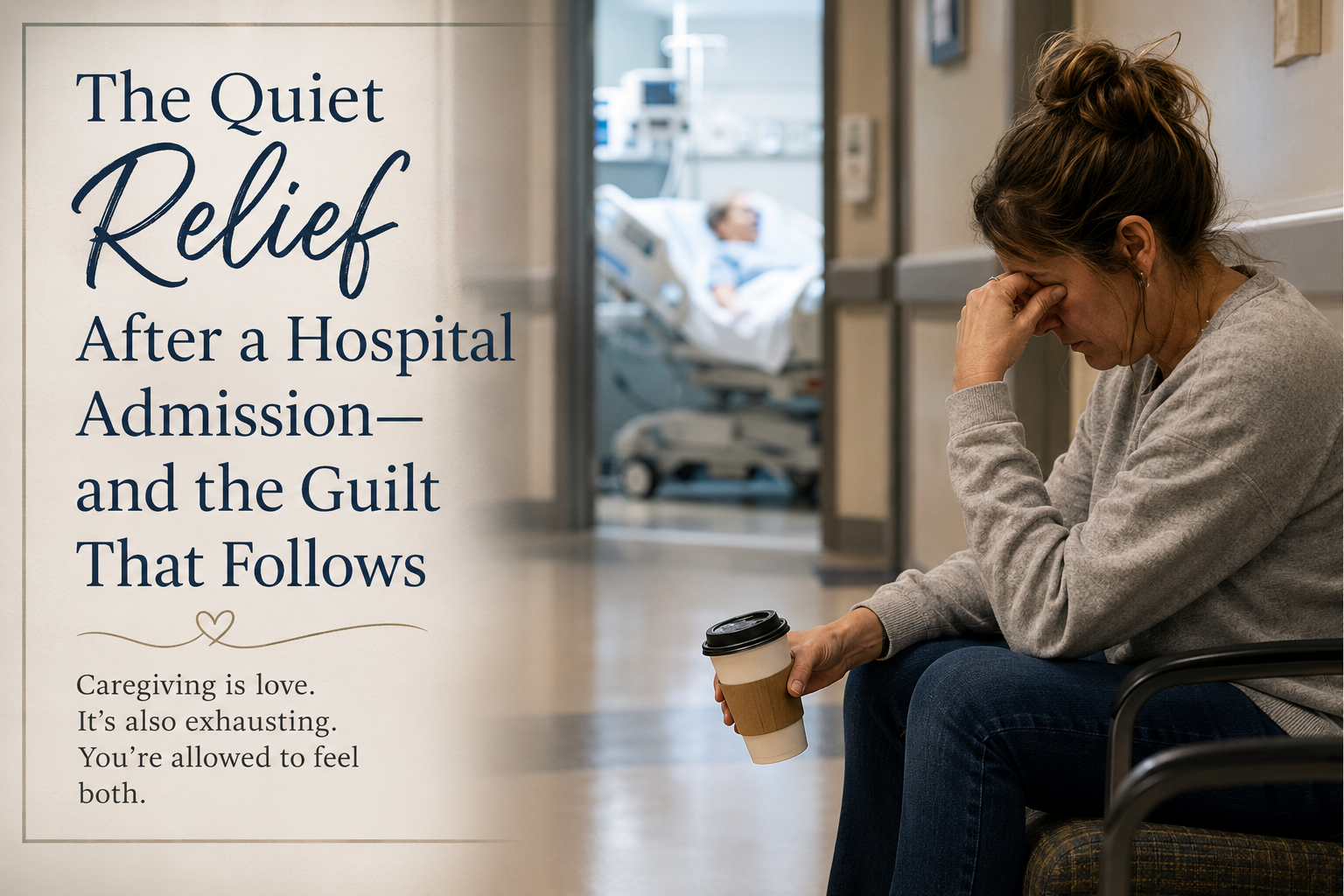
And sometimes even when a hospitalization is clearly necessary, the emotions afterward aren’t what you expect. There can be fear, guilt—and even relief. I talk about that complicated mix in The Quiet Relief After a Hospital Admission—and the Guilt That Follows.
A Better Question Than “What If I’m Wrong?”
When you’re overwhelmed, asking yourself whether you’re making the “right” decision can sometimes make you freeze.
Instead, try asking:
What information do I have right now?
What am I seeing that concerns me?
What does my loved one want, if they’re able to tell me?
What are the risks of doing something—and the risks of doing nothing?
Who can give me reliable medical or professional guidance about this?
And when you’re talking with healthcare professionals, don’t be afraid to say:
“I am the person caring for them at home. I need to understand what this decision will actually look like once we leave here.”
That question matters.
Because the plan that sounds manageable in a hospital room or doctor’s office may look completely different at 3:00 in the morning when one exhausted caregiver is responsible for carrying it out.
Write Things Down When Your Brain Is Overloaded
Fear makes it difficult to think clearly.
So does exhaustion.
If you’re facing a significant decision, write down what you know.
Write down your questions.
Write down what changed.
Write down what the doctor said.
Write down medications, symptoms, dates, instructions, and names.
You don’t need a beautiful organizational system.
You need something that keeps important information from disappearing when your brain is overloaded.
Because when caregiving becomes intense, memory isn’t always reliable.
Documentation gives you something concrete to return to.
You Are Allowed to Ask the Same Question Twice
Caregivers sometimes worry about being difficult.
Don’t.
If you don’t understand something, ask again.
If the explanation doesn’t make sense, ask for it in simpler language.
If you’re being discharged and don’t understand what you’re supposed to watch for at home, ask specifically:
“What would mean I need to call you?”
And:
“What would mean I need to seek emergency care?”
If several options are being discussed, ask what the practical differences are.
You aren’t wasting anyone’s time by trying to understand a decision you’re going to be responsible for carrying out.
The Decision That Protects the Caregiver Matters Too
This one can be uncomfortable.
Caregivers are often taught—directly or indirectly—that the only person’s needs that matter are the care recipient’s.
But there may come a point when a decision has to include what you can physically and realistically continue doing.
If transferring someone alone is becoming unsafe, that matters.
If you are so exhausted that mistakes are becoming more likely, that matters.
If someone’s care needs have exceeded what can safely be provided at home by one person, that matters.
Recognizing your limits isn’t the same thing as abandoning someone.
Sometimes acknowledging those limits is part of making a responsible decision.
This is also why caregiver burnout can become more than simply “being tired.” When you’re carrying too much for too long, it can affect nearly every part of your life. The Silent Burnout Before the Breakdown goes deeper into the warning signs caregivers often dismiss until they can’t anymore.
Some Decisions Will Still Hurt
You can gather information.
You can ask questions.
You can involve doctors.
You can consider risks.
You can listen to your loved one.
You can think carefully.
And the decision can still hurt.
That is one of the hardest realities of caregiving.
Sometimes there is no option that leaves everyone happy.
Sometimes the best information available still doesn’t give you certainty.
Sometimes love doesn’t make the answer obvious.
In fact, love can make the decision harder because you care so deeply about what happens next.
You Were Making Decisions Inside a Situation You Didn’t Choose
If you’re looking back at a caregiving decision and thinking:
I should have known.
Remember something.
You were not standing outside the situation calmly analyzing it with unlimited time and perfect information.
You were inside it.
Possibly exhausted.
Possibly scared.
Possibly running on very little sleep.
Possibly trying to understand complicated medical information while simultaneously caring for someone who needed you.
You made the decision with the information, resources, and capacity you had at that moment.
There may always be decisions you wish had gone differently.
There may always be questions you wish you’d asked.
That’s part of being human.
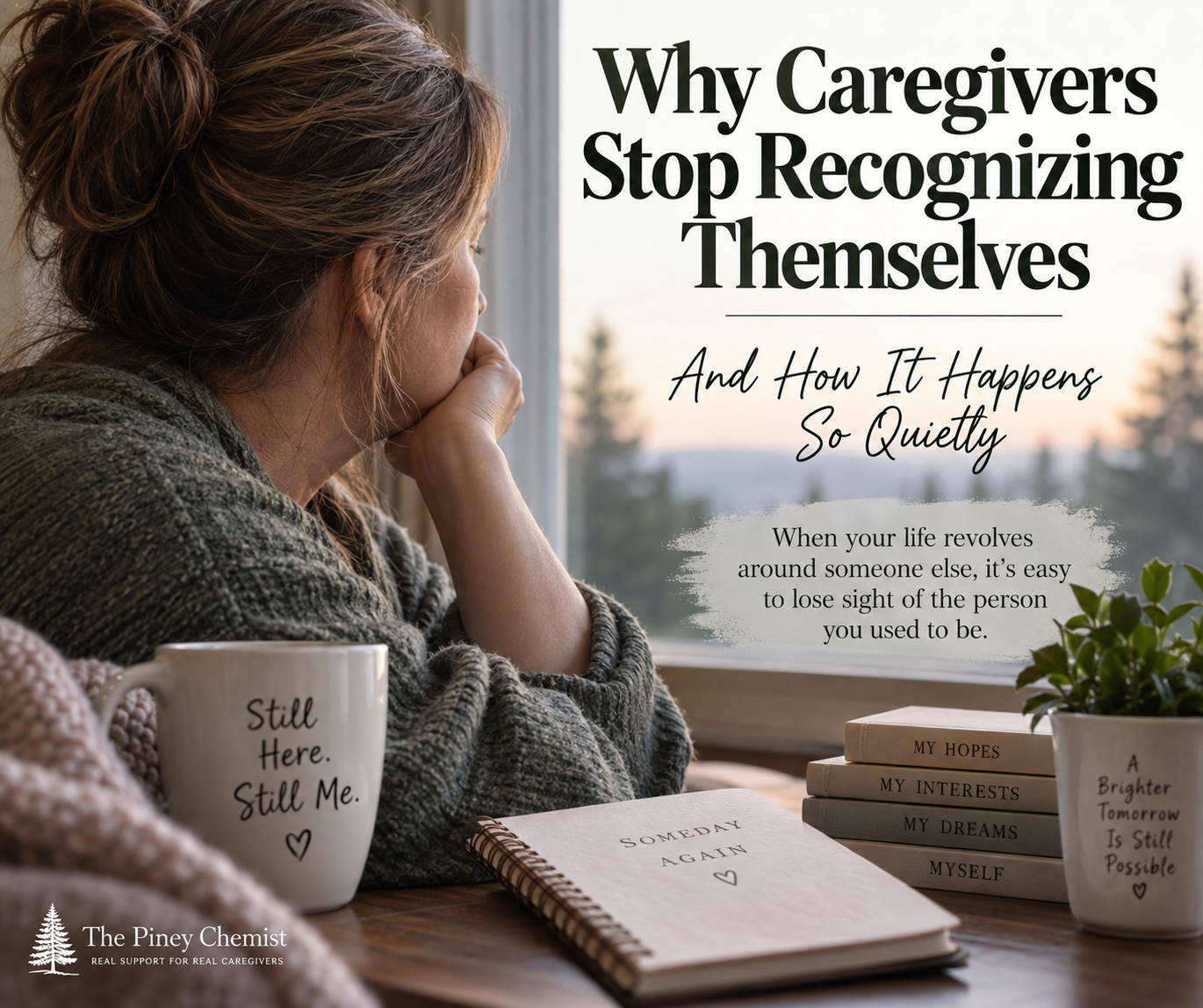
And carrying that responsibility for months or years can change the way you see yourself. If you’ve ever looked in the mirror and wondered where the person you used to be went, you may relate to Why Caregivers Stop Recognizing Themselves.
The Fear Comes From Caring
Caregivers don’t obsess over these decisions because they don’t care.
They obsess because they care tremendously.
You want to protect someone.
You want to relieve suffering.
You want to respect what they want.
You want to keep them safe.
And somehow you’re supposed to balance all of those things while accepting that you cannot control every outcome.
That’s an enormous emotional burden.
So when you find yourself staring at two imperfect choices, desperately searching for the one that guarantees everything will turn out okay, remember:
Sometimes there isn’t a perfect choice.
There is only the information you have.
The person you love.
The circumstances you’re facing.
And the best decision you can make in that moment.
That’s what caregiving asks of us far more often than anyone admits.
Caregiving Is Hard Enough Without Feeling Alone in It
If you’ve ever had thoughts about caregiving that you were afraid to say out loud, you’re in the right place.
At The Piney Chemist, I share honest caregiving conversations, practical advice, and the real-life lessons I learned from years of caring for my grandmother.
No pretending caregiving is easy.
No sugarcoating the parts that are incredibly hard.
Just real-life caregiving from someone who’s lived it.
Follow The Piney Chemist on Facebook for more honest caregiver support, practical tips, and the conversations caregivers deserve to have.
And if another caregiver needs to hear this today, share this article with them. Sometimes knowing someone else has wrestled with the same fear can make the weight feel a little less lonely.
Amazon and the Amazon logo are trademarks of Amazon.com, Inc, or its affiliates.


Leave a Reply