
As an Amazon Associate I earn from qualifying purchases.
Caregiving survival doesn’t look heroic.
It doesn’t look like the inspirational quotes people post online.
It doesn’t look like having everything organized, staying positive, or somehow finding time for self-care every day.
Real survival looks a lot messier.
It looks like eating whatever you can find because you forgot to make yourself lunch.
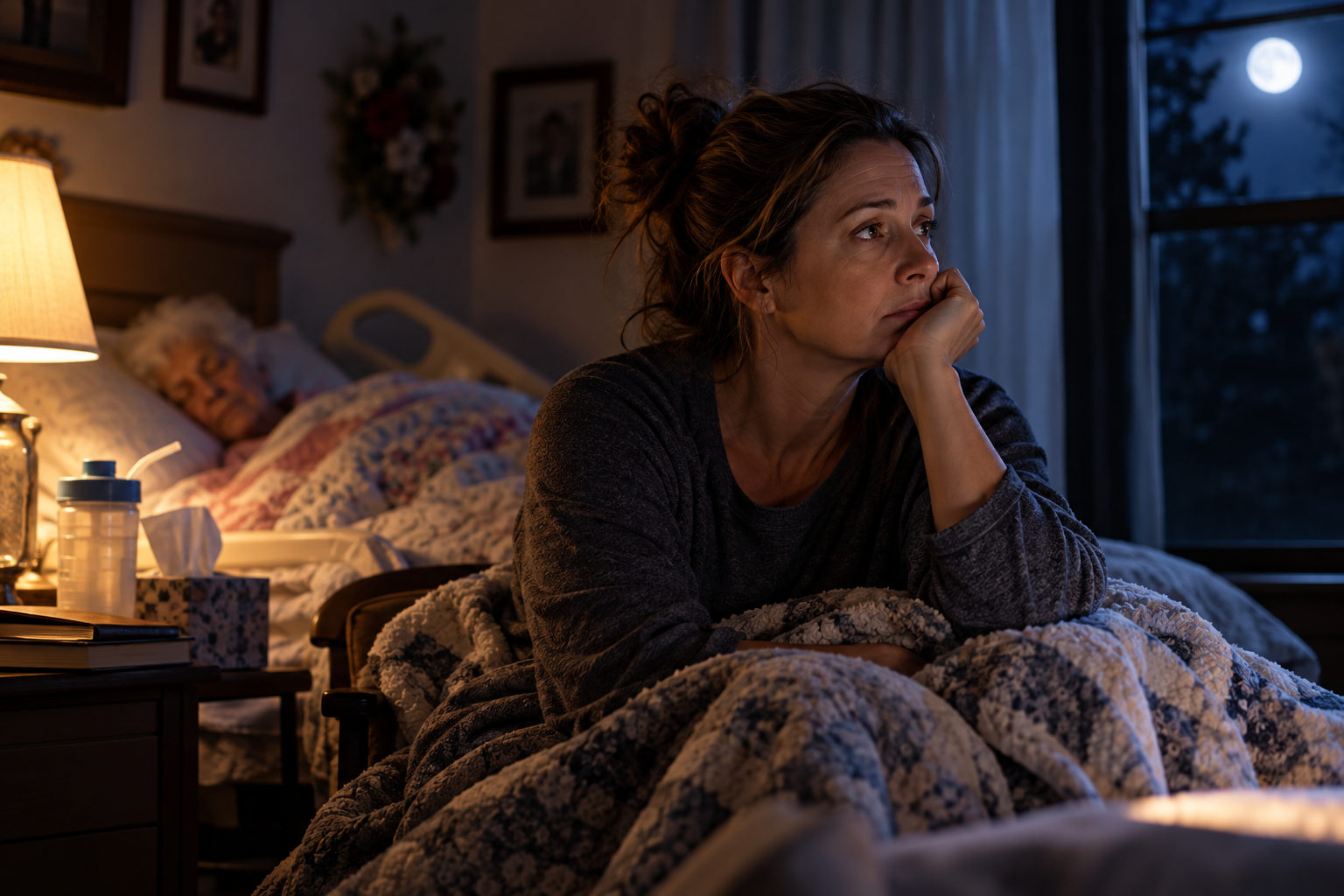
It looks like changing another brief in the middle of the night and wondering how you’re going to function tomorrow.
It looks like keeping a mental list of medications, appointments, supplies, symptoms, and a hundred other things while your own needs keep getting pushed to the bottom.
It looks like sitting in your car for a few extra minutes because you’re not ready to walk back into the house.
It looks like making it through another day that nobody else realizes was incredibly hard.
That’s what survival actually looks like in caregiving.
The Work No One Sees
Most people only see the visible parts of caregiving.
The doctor’s appointments.
The hospital visits.
The wheelchair.
The medications.
They don’t see the thousands of invisible decisions you make every day.
You’re constantly watching for changes.
Keeping track of medications.
Wondering if you have enough supplies.
Remembering when prescriptions need to be refilled.
Making phone calls.
Managing paperwork.
Planning meals.
Cleaning up messes.
Trying to prevent the next crisis before it happens.
Your body gets tired.
But it’s your mind that never gets a break.
If you’ve ever wondered why you’re exhausted even on days you barely sat down, it’s because your brain has been working overtime for months—or even years.
Related: The Hard Truth About Caregiving No One Warns You About: You Slowly Become Invisible
Survival Means Letting Go of Perfect
One of the hardest lessons I had to learn was that “good enough” is sometimes the biggest win of the day.
The laundry waits.
Dinner is simple.
The house isn’t spotless.
Texts go unanswered.
You stop apologizing for saying no.
Not because you’ve stopped caring.
Because you’re doing everything you can just to keep going.
Caregivers often measure themselves by everything they didn’t get done.
But they rarely stop to recognize everything they did accomplish.
If everyone else had your responsibilities for just one week, they’d understand why perfection isn’t the goal.
Survival is.
I Finally Stopped Trusting My Memory
For a long time, I thought I could keep everything in my head.
Medication schedules.
Appointment dates.
Questions for doctors.
Supply lists.
Symptoms.
Insurance information.
Eventually my brain said, “Nope.”
Sleep deprivation has a way of stealing your memory before you even realize it’s happening.
That’s when I stopped relying on memory and started relying on systems.
I wrote everything down.
I made checklists.
I created trackers.
Because every piece of information I put on paper was one less thing I had to carry in my head.
If you’re constantly feeling mentally overloaded, you might also find these articles helpful:
- Caregiving Mistakes That Drained My Energy (And What I Wish I’d Done Sooner)
- What I’d Set Up First If I Had to Start Caregiving Again Tomorrow
The Little Things That Helped Me Survive
People often ask what made the biggest difference.
It wasn’t one giant solution.
It was dozens of small ones.
Keeping supplies in more than one room.
Wearing clothes with pockets so I always had gloves, wipes, or medication close by.
Taking pictures of medication bottles.
Keeping a notebook beside me.
Preparing tomorrow’s supplies before I went to bed.
None of those things solved caregiving.
But together they made every day a little less overwhelming.
Sometimes survival isn’t about finding a life-changing hack.
Sometimes it’s just making tomorrow a little easier than today.
You Don’t Have to Carry It All Alone
One of the reasons I created my Caregiver Printable Bundle is because I know what it’s like to feel like your brain is carrying an impossible amount of information.
The bundle includes practical printables that help you stay organized without trying to remember everything:
- Medication Master List
- Caregiver Command Center
- Appointment Companion
- Symptom & Observation Tracker
- Supply Tracker
- Night Shift Checklist
- Emergency Information Sheet
They’re not about creating the “perfect” caregiving system.
They’re about reducing mental overload so you can spend less energy trying to remember everything and more energy caring for your loved one—and yourself.
You’re Probably Doing Better Than You Think
Caregivers are some of the hardest people on themselves.
You remember every mistake.
Every moment you lost your patience.
Every task you didn’t finish.
But you rarely give yourself credit for everything you’re doing right.
You’re showing up.
You’re adapting.
You’re solving problems most people can’t even imagine.
You’re giving someone safety, comfort, and dignity on some of the hardest days of their life.
That matters.
More than you know.
Final Thoughts
If today felt impossible but you still made it through…
You survived.
If you’re exhausted but you’ll get up tomorrow and do it all again…
You survived.
If nobody has told you lately that what you’re doing is incredibly hard…
Let me be the one to say it.
I see you.
And if you’re surviving instead of thriving right now, that’s okay.
Because survival isn’t weakness.
Sometimes, survival is the bravest thing a caregiver can do.
Continue Reading
If this post resonated with you, you may also like:
- The Hard Truth About Caregiving No One Warns You About: You Slowly Become Invisible
- Caregiving Mistakes That Drained My Energy (And What I Wish I’d Done Sooner)
- What I’d Set Up First If I Had to Start Caregiving Again Tomorrow
- When Midlife Changes and Caregiving Happen at the Same Time
If caregiving feels like it’s taking up all the space in your head, my Caregiver Printable Bundle was created from real-life experience to help you organize medications, appointments, supplies, symptoms, and daily tasks in one place—so you don’t have to rely on memory alone.
If this article made you feel seen, follow me on Facebook. Every week I share honest caregiving stories, practical tips, and the hard truths no one else seems willing to talk about.
Amazon and the Amazon logo are trademarks of Amazon.com, Inc, or its affiliates.



Leave a Reply