
As an Amazon Associate I earn from qualifying purchases.
Caregiving is exhausting.
I know that from experience.
After spending 11 years caring for my grandmother, I learned just how much physical strength, mental energy, and emotional resilience it takes to make it through each day. Some days you feel like you’ve run a marathon before breakfast.
But there’s another challenge that doesn’t get talked about nearly enough.
Many caregivers are also going through major midlife changes at the exact same time.
If you’re in your 40s or 50s and suddenly dealing with brain fog, trouble sleeping, mood swings, joint pain, or overwhelming fatigue, you might wonder:
“Is this caregiver burnout…or is something else going on?”
For many people, the answer may be both.
Caregiving Doesn’t Pause Because Your Body Is Changing
One of the hardest parts about being a caregiver is that your responsibilities don’t stop just because you’re struggling.
The medications still have to be given.
Meals still need to be prepared.
Appointments still need to be scheduled.
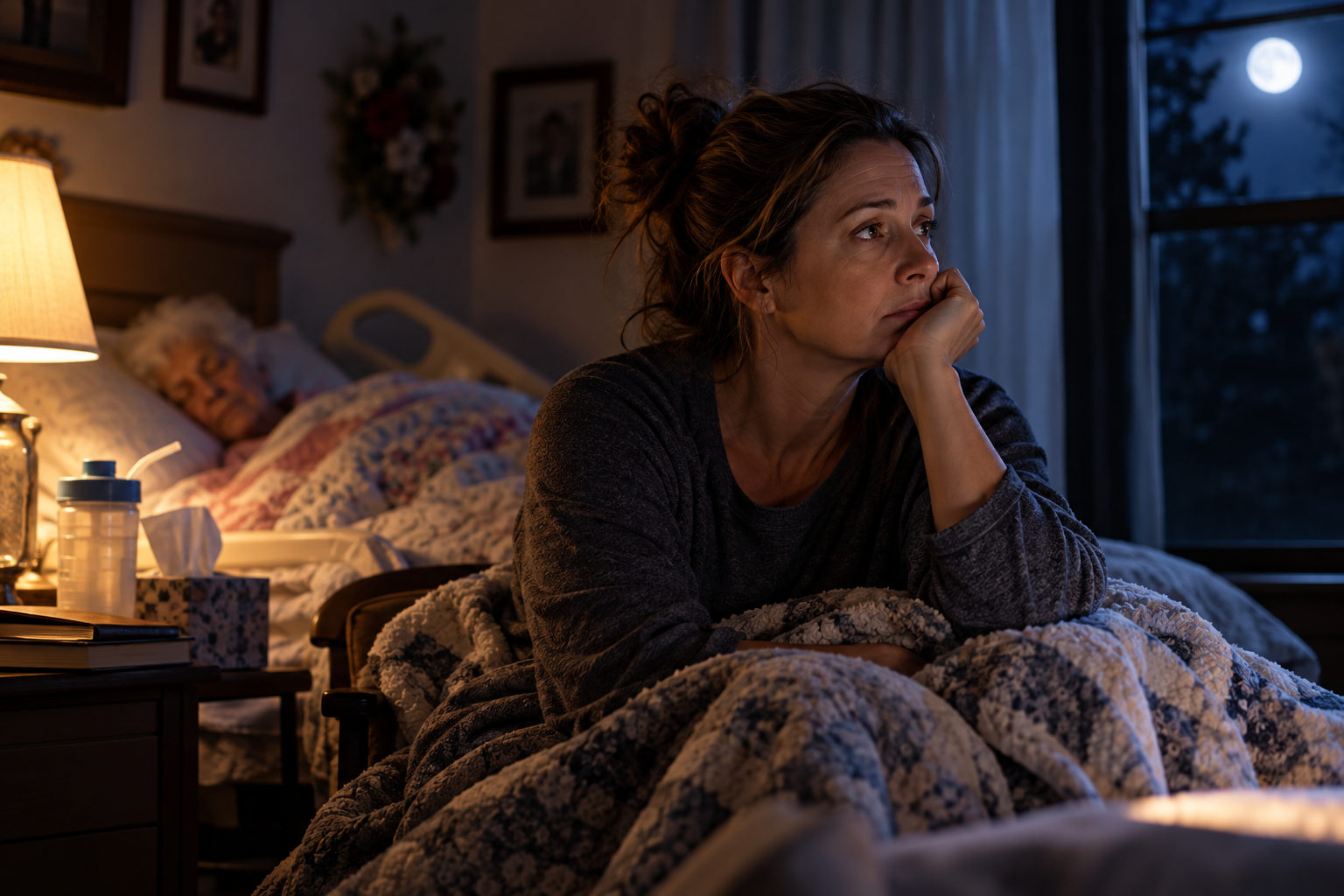
Someone still needs help getting out of bed, using the bathroom, or making it safely through the night.
Your own body doesn’t get a timeout.
I’ve heard from caregivers who felt guilty because they suddenly couldn’t remember simple things or felt emotionally overwhelmed by tasks they’d handled for years.
They assumed they just weren’t strong enough.
But sometimes your body is dealing with more than caregiving alone.
If you’ve been wondering whether what you’re feeling is burnout, you may also relate to “Recognizing Caregiver Burnout: The Signs I Wish I Hadn’t Ignored.”
The Symptoms Can Overlap
Caregiver burnout and midlife changes can look surprisingly similar.
Both can cause:
- Extreme fatigue
- Difficulty concentrating
- Memory problems
- Trouble sleeping
- Irritability
- Anxiety
- Feeling emotionally drained
- Lack of motivation
When those symptoms happen together, it can feel impossible to separate one from the other.
Instead of blaming yourself, it may be worth recognizing that multiple factors could be contributing to how you’re feeling.
I think many caregivers spend years asking, “What’s wrong with me?” when the better question might be, “Am I carrying too much?”
The Mental Load Gets Even Heavier
People often think caregiving is mostly physical.
It’s not.
It’s remembering medication schedules.
Tracking appointments.
Watching for new symptoms.
Refilling prescriptions.
Keeping insurance information organized.
Planning meals.
Managing supplies.
Preparing for emergencies.
Even on days when you barely lift a finger, your brain rarely gets a break.
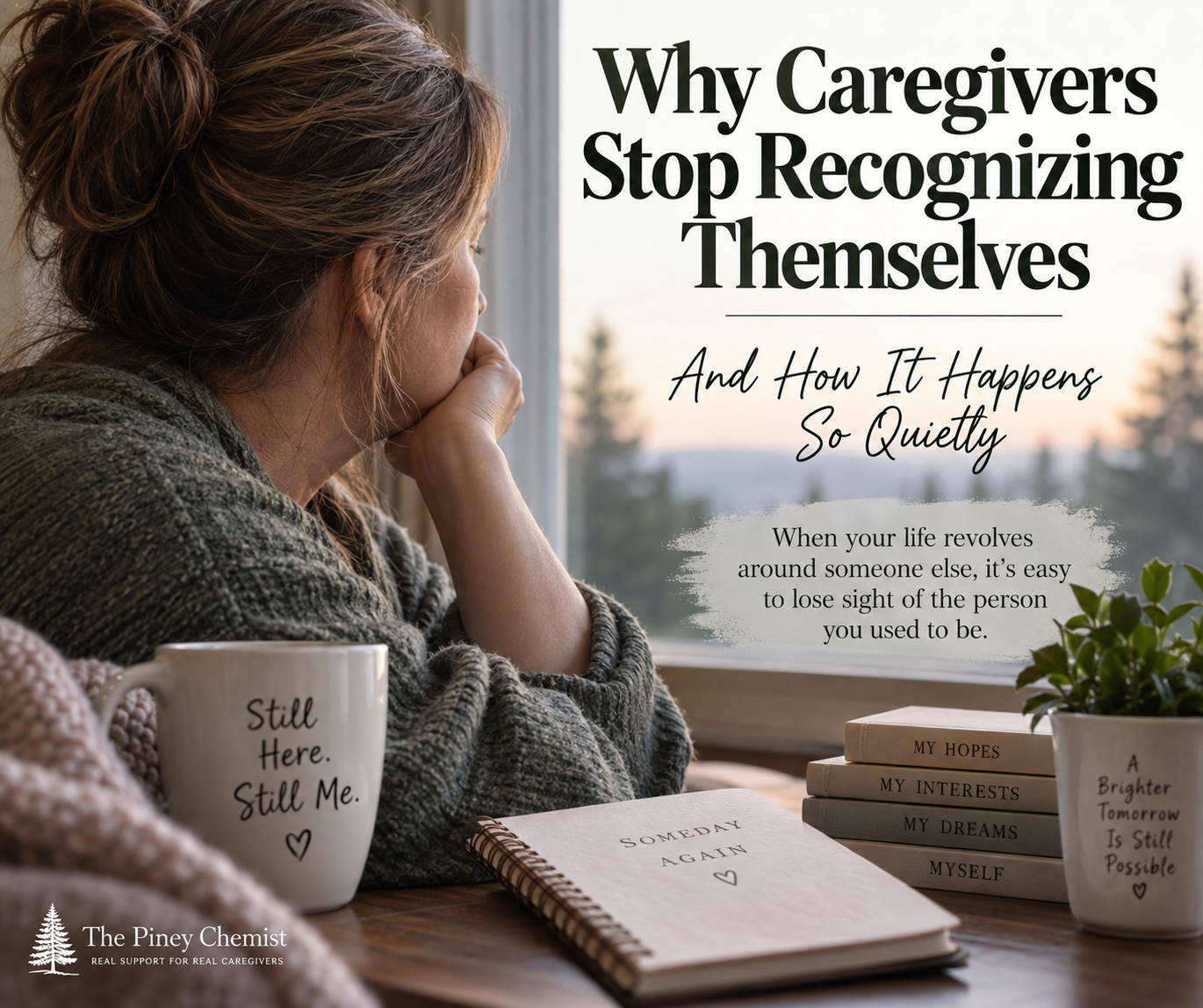
That’s one reason so many caregivers lose sight of themselves.
If that sounds familiar, I recommend reading “When Caregiving Takes Over Your Identity.” It’s something many of us experience but rarely admit out loud.
You Start Wondering Who You Are Anymore
When you’re caring for someone every day, your own needs slowly move to the bottom of the list.
Weeks turn into months.
Months turn into years.
You become known as the helper, the daughter, the spouse, the caregiver.
Somewhere along the way, you stop asking yourself what you need.
For caregivers also navigating midlife, that loss of identity can feel even more profound.
You aren’t just adjusting to changes in your caregiving role.
You’re adjusting to changes in your own body and life at the same time.
If you’ve ever looked in the mirror and felt like you’ve disappeared, you’re not alone.
You might also connect with “Who Am I After Years of Caregiving?”
You Don’t Have to Earn Rest
One of the biggest traps caregivers fall into is believing they have to completely fall apart before they’re allowed to slow down.
You don’t.
If you’re exhausted, that’s enough reason to rest when you can.
If you’re struggling to concentrate, that’s enough reason to simplify your routine.
If your body is changing during midlife while you’re also caring for someone else, that’s a heavy load to carry.
Give yourself some grace.
And if you’ve been feeling like you’re the only one trying to hold everything together, I encourage you to read “Caregiving Without a Support System: How to Cope, Stay Strong, and Protect Your Well-Being.” Sometimes simply knowing someone else understands can make you feel a little less alone.
Pay Attention to What Your Own Body Is Telling You
When caregiving and your own life changes are happening at the same time, it can be hard to tell where the exhaustion, irritability, poor sleep, or overwhelm is even coming from.
And when someone else depends on you, it’s easy to keep pushing your own warning signs aside.
That’s one reason I created my Caregiver Burnout Check-In. It’s a simple, editable Microsoft Word page that helps you keep an eye on your stress, energy, sleep, emotions, and physical well-being.
It’s not another complicated thing to manage. It’s simply a way to stop occasionally and ask, “How am I actually doing?”
→ See the Caregiver Burnout Check-In
Final Thoughts
Caregiving is hard.
Midlife changes can be hard.
Experiencing both at the same time can feel overwhelming.
While I can’t speak from personal experience about navigating hormonal changes, I can say this after 11 years of caregiving: your body deserves care too.
You are not a machine.
You are not failing.
And you shouldn’t have to ignore your own struggles just because someone else depends on you.
The caregiver matters too.
💙 Follow & Save
If this article made you feel seen, save it for the days when you’re questioning why you’re so exhausted. Sometimes the answer isn’t one thing—it’s everything you’re carrying.
And if you’re looking for honest caregiving stories, emotional support, and practical advice from someone who spent 11 years doing this every single day, follow The Piney Chemist. My goal is to help caregivers feel less alone and better prepared for the road ahead.
Amazon and the Amazon logo are trademarks of Amazon.com, Inc, or its affiliates.


Leave a Reply