
As an Amazon Associate I earn from qualifying purchases.
There’s a moment in caregiving nobody really talks about.
It doesn’t usually happen during the big emergencies.
It happens while you’re standing in the kitchen reheating coffee for the third time.
Or sitting in your car for five extra minutes because you physically cannot make yourself walk back inside.
Or lying awake at night staring at the ceiling thinking:
I cannot keep doing this.
And then right behind that thought comes the guilt.
Because who says that?
What kind of person thinks that about someone they love?
A tired one.
An overwhelmed one.
A caregiver who has been carrying too much for too long.
I know, because I’ve been there.
After 11 years of caring for my grandmother, I can tell you this:
Burnout doesn’t show up like some dramatic movie scene.
It shows up quietly.
It looks like forgetting simple things.
It looks like snapping over nothing.
It looks like resenting people you love and then hating yourself for it.
It looks like surviving on caffeine, bad sleep, and “I’ll deal with it later.”
It looks like functioning…while falling apart.
And the worst part?
Most people around you don’t even notice.
Burnout Doesn’t Start When You Break
It starts way before that.
It starts when you stop taking care of yourself because there’s “no time.”
It starts when asking for help feels harder than just doing it yourself.
It starts when you convince yourself exhaustion is just part of the job.
It starts when your whole life becomes managing someone else’s needs while yours quietly disappear.
That’s why I wrote about hitting my own wall in
When I Hit Caregiver Burnout Rock Bottom (And How I Pulled Myself Out)
Because burnout doesn’t happen overnight.
It happens one skipped meal, one sleepless night, one “I’m fine” at a time.
And if you’re doing this alone, it happens even faster.
That’s exactly why I also wrote
Why Solo Caregivers Burn Out Faster Than Anyone Else
Because doing this without real support will break even the strongest person eventually.
The Thought That Scares You Most
Sometimes the scariest thought isn’t “What if something happens to them?”
It’s:
What if something happens to me?
Who steps in?
Who knows the medication list?
Who knows the routine?
Who knows where the paperwork is?
Who knows how much you’ve been holding together with duct tape and pure stubbornness?
That fear is real.
And it’s why I tell caregivers to prepare before the emergency, not during it.
That’s where
The Emergency Drawer Every Caregiver Should Have (And Why I Wish I Made Mine Sooner)
comes in.
Because panic gets louder when there’s no plan.
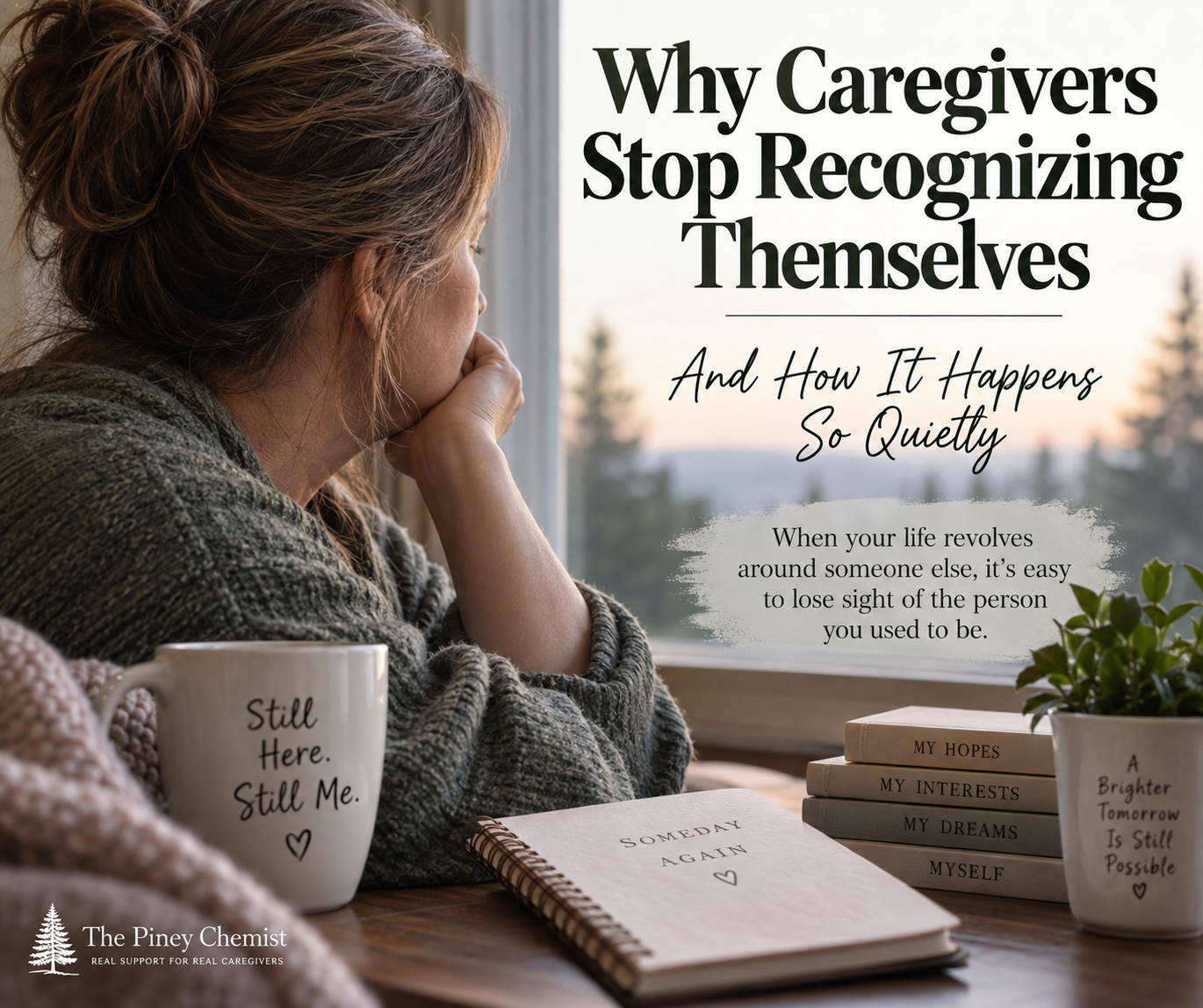
You’re Allowed to Miss Your Old Life
This one makes people uncomfortable.
But I’m going to say it anyway.
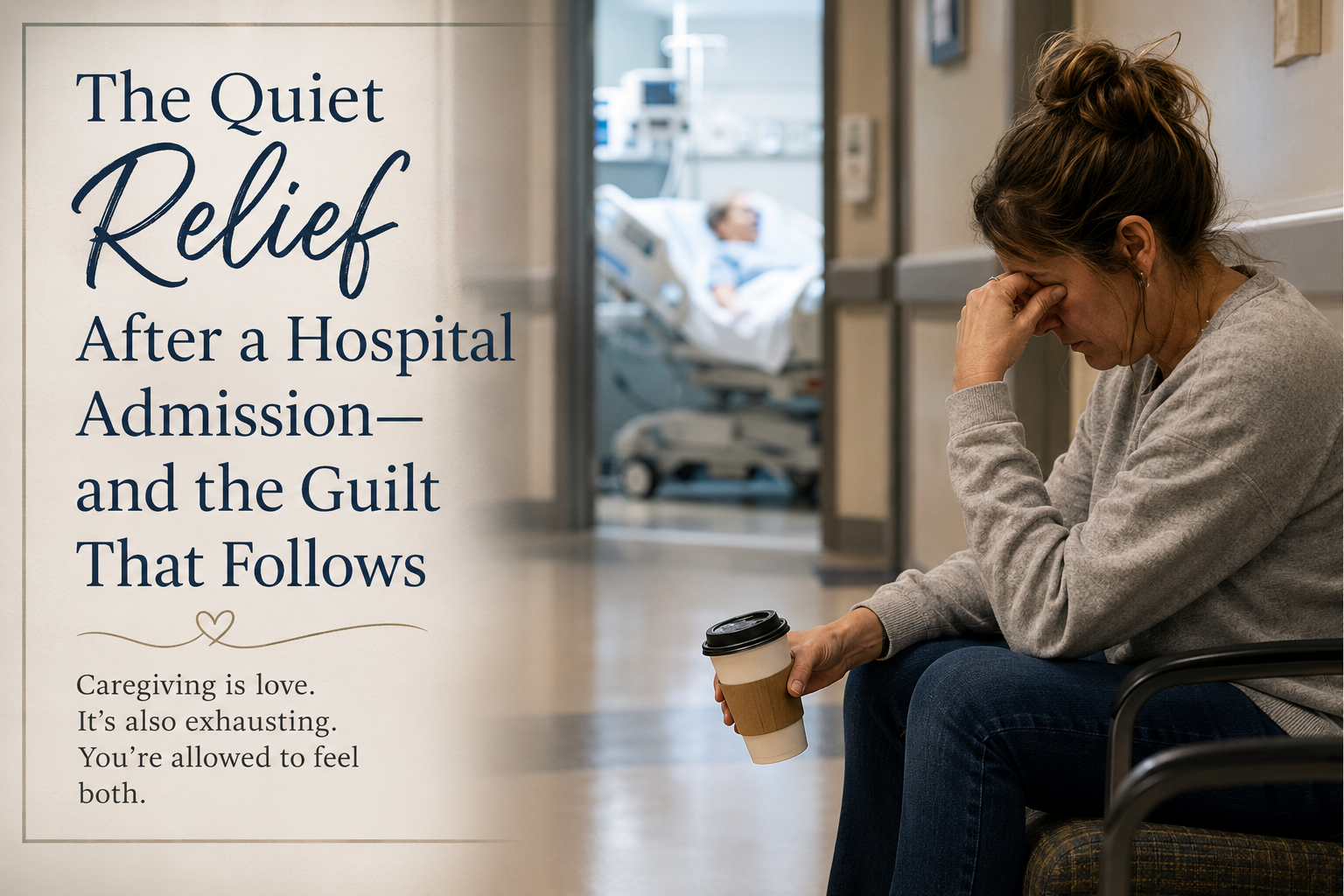
You can love someone deeply…and still miss your freedom.
You can be grateful…and exhausted.
You can be devoted…and angry.
You can be a good caregiver…and still wish your life looked different.
Both things can be true.
A lot of caregivers carry guilt for grieving the life they put on hold.
The career.
The sleep.
The spontaneity.
The relationships.
The version of yourself that didn’t feel constantly needed.
That grief is real.
And pretending it isn’t only makes it heavier.
That’s why
Grieving the Life You Put on Hold
matters.
Because some losses don’t come with funerals.
Sometimes they come with routines.
Nights Make Everything Worse
Daytime caregiving is hard.
Night caregiving is where burnout gets personal.
Because exhaustion hits differently in the middle of the night when someone needs help getting to the bathroom, and you’re trying not to cry because you haven’t had a full night of sleep in months.
That kind of tired changes you.
It affects your patience.
Your health.
Your memory.
Your relationships.
It makes everything feel heavier.
That’s exactly why I wrote my book:
Night Caregiving Survival Guide: How to Get Through the Hardest Hours Without Burning Out
Because nights were where I struggled the most.
And honestly?
I wrote the book I wish someone had handed me years ago.
If nights are breaking you, start there.
What Help Actually Looks Like
Sometimes help isn’t some huge life-changing solution.
Sometimes it’s:
Using transfer tools before your back gives out
(see: A Safer Way to Transfer Someone Without Hurting Yourself or Them)
Setting up systems that save your mental energy
(see: How to Create a Medication Station That Reduces Caregiver Stress)
Buying the simple products that should have been in your house months ago
(see: Products I Wish I Had Sooner)
Taking the shower.
Eating the actual meal.
Sitting outside for ten minutes.
Help is often smaller than people think.
But small things keep people afloat.
If You’ve Thought “I Can’t Keep Doing This”…
That thought doesn’t mean you love them less.
It means you’ve been carrying too much without enough support.
It means something has to change.
Not because you’re weak.
Because no one was meant to do this alone.
And if no one has told you lately:
You are doing more than most people will ever understand.
But survival should not be the goal forever.
At some point, caregiving has to include caring for you, too.
Because if you collapse, the whole system does.
And most caregivers?
We learn that lesson the hard way.
I know I did.
Solo Caregiving Is Hard Enough—Staying Organized Shouldn’t Be
When you’re the only caregiver, there’s no one to remind you about appointments, refill supplies, keep track of medications, or remember the questions you wanted to ask the doctor. Every detail lives in your head—and that’s exhausting.
That’s exactly why I created the Caregiver Printable Bundle.
Designed from real solo caregiving experience, these printables give you one place to organize the information you rely on every day, helping you reduce mental overload and feel more in control.
Inside the bundle, you can:
- Organize your day with the Caregiver Command Center.
- Keep medications, dosages, and schedules in one place with the Medication Master List.
- Track symptoms, changes, and important observations before they become easy to forget.
- Keep emergency information ready when every second matters.
- Stay ahead of supplies so you’re not making last-minute trips to the store.
- Prepare for doctor appointments with the Caregiver Appointment Companion.
- Stay organized during overnight care with the Night Shift Checklist.
When you’re doing the work of an entire caregiving team by yourself, having a simple system can make a world of difference.
If this hit home, follow The Piney Chemist | Caregiving Made Easier on Facebook.
I talk about the parts of caregiving people avoid—the burnout, the resentment, the guilt, the exhaustion—and more importantly, the real solutions that help you survive it.
Amazon and the Amazon logo are trademarks of Amazon.com, Inc, or its affiliates.


Leave a Reply